Just as last year, the third tier of women’s football has captivated me, and what’s not to love? For me, sports is all about storylines and 2kvk has plenty: a sleeping giant and a plucky underdog fighting for the title with a team still festering from narrowly missing promotion last year, a team recovering from tragedy, and even two brand new teams that didn’t play in the league before this season.
Add to that the division having a unique format this year, with the 13 clubs playing each other once before splitting into three where they’ll play their sectional rivals home and away. Here’s how the table looks heading into that split, with changes since the start of July shown in red:
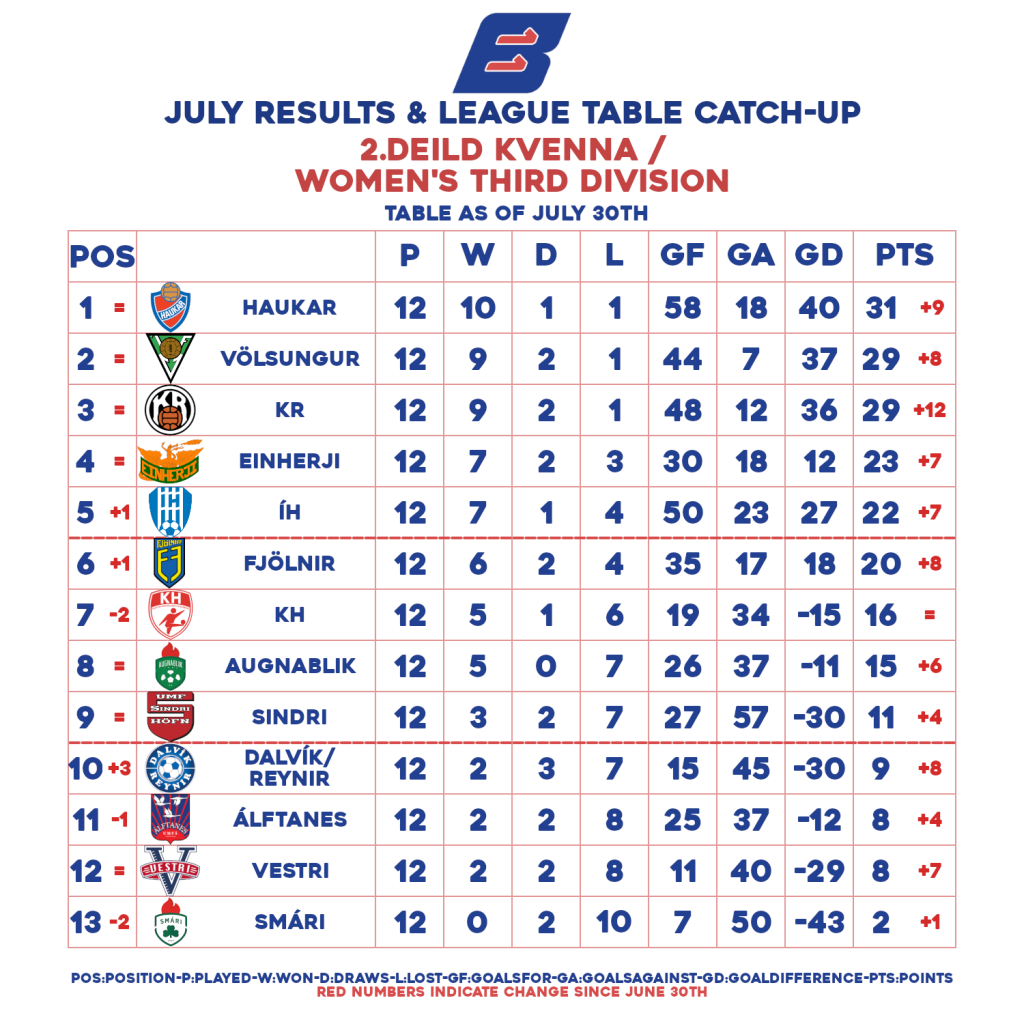
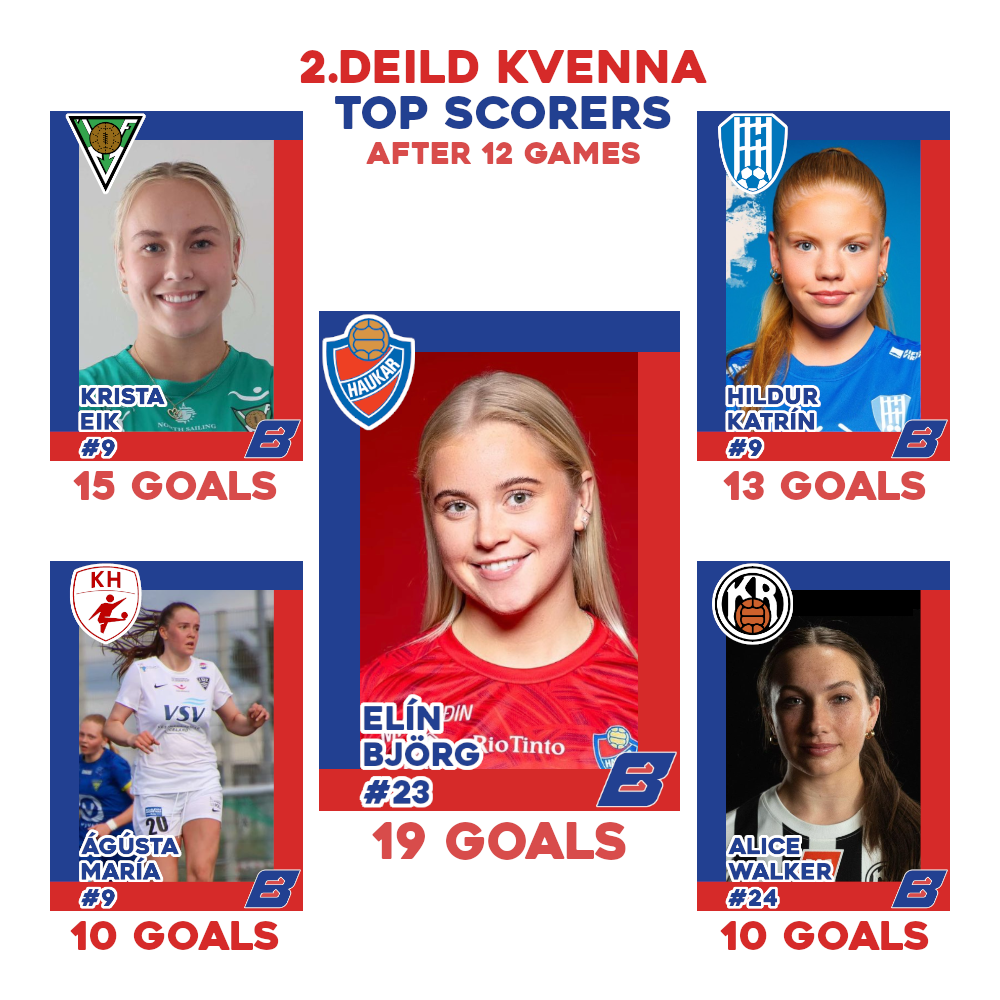
Pre-season favourites Haukar may see last year’s failure to achieve promotion as a missed opportunity, but they’re certainly not wasting many chances in front of goal, as they’ve netted an average of almost 5 goals per game. It should probably be a slight concern that their defensive record isn’t quite as good as the other frontrunners, and it’s a surprise to me that such a talented rearguard has conceded so many in the first half of the season.
By contrast, Völsungur have had an astounding defensive record so far, with any team scoring even a single goal against them doing better than the average opponent. They’ve also made headlines for the youth of some of their players, with a mother-daughter pairing playing together and a goal scorer born in 2011. Pre-season predictions from the coaches in the division had the Húsavík side finishing in 5th place and, while that now represents their lowest possible placing, I’m honestly not at all surprised that the 2o23 C-tier League Cup champions are contesting the 2.deild title this year.
Six-time First Division champions KR probably should never be here, but it’s taken somewhat of a reset after last year’s relegation to return to a winning culture in Vesturbær. Precited to be right alongside Haukar, they’re keeping pace for the most part, and have beaten everyone from the post-split A-group except for the Ásvellir club. They have had some surprising mis-steps however: They only managed to draw with Sindri and Dalvík/Reynir, both of whom had been taking heavy losses before that, but more on them later.
Closing out the A-Group are Einherji and ÍH, with the latter the only club to finish July in a different section of the split than at the start of the month. ÍH were frankly a bit Jekyll and Hyde in the first half of the year, being on both ends of drastic scoring margins and needing to improve their performances against their fellow top-5 opponents, who they have so far only managed a single point against. Despite one of those heavy losses for ÍH being at the hands of Einherji, the Vopnafjörður club are the lowest scorers of the A-section, 8 of their 30 goals scored (26%) coming from that match.
Fjölnir and Augnablik had records in July that came close or even bettered some from the top-5, but the split will come as some degree of disapointment for both as well. The preseason poll I mentioned before saw Augnablik among the fight for promotion, maybe in part because they were a relagated club. Seeing how they matched up last year against fellow relegated club KR makes their middle-section finish less surprising to me. The drop-off for FJölnir compared to last season will likely be in part from losing nationwide top scorer of 2023 in Alda Ólafsdóttir to Fram, goalkeeper Katelyn Kellogg to Grindavík, Katrín Vilhjálmsdóttir to Afturelding, Elvý Rut Búadóttir to Grótta, and others.
By virtue of being a de facto youth squad for Valur, KH is also a team influenced by loss of promising players, with big sister deciding that Glódís María and 2023 captain Valgerður Gríma are better of on loan at Haukar and KR than playing this season at Hlíðarendi. They have done really well so far considering the lack of experience in the lineup, but lack of goals should be a concern especially now that Ágústa María has left to join ÍBV having scored more than half of the team’s tally.
An under-the-radar success story from the season so far is the vast improvement of Sindri, not just since last season but from how they started this one. The opening day win over Smári was followed by a combined 25-0 loss to Völsungur and ÍH. The attitude out east shifted after that and they began a resurgence with the draw against KR. Their only subsequent wins have been against the two new clubs on the block, but the manner of their defeats has been a marked difference. The fresh challenge comes now having made it into the middle section of the split.
A resurgence I didn’t see coming was that of newbies Dalvík/Reynir. The club were yet to win a game but had surprise draws against Einherji and KR when they found themselves needing to win each of their final 3 pre-split games and have other teams’ results go their way in order to pip Sindri to a place in the middle group. Not only did all those other results go their way, they also won the first 2 of their own games, needing just to beat the bottom of the league club to finish an awesome feat. Smári would play spoiler however, which would be just their second point of the season.
Álftanes have had a regression from 2023 but are another club restricted by the whims of a bigger club, As Stjarnan recalled players like Kata Clausen, Hrefna Jónsdóttir, Fanney Lísa, Ingibjörg Erla, Karlotta Björk, Sóley Edda, and Hrafnhildur Salka (now on loan at HK) after they combined for 94 league appearances last season.
Vestri are a point behind fellow newcomers Dalvík/Reynir but have two more chances to best them post-split. It’s been a promising start to life in the league for them, with even the defeats being largely by reasonable margins relative to those we have seen from other clubs. After a first point was won with a draw against Smári and they did even better to tie with Fjölnir at the start of July, before they got their first taste of victory against Álftanes and even more impressively against Einherji.
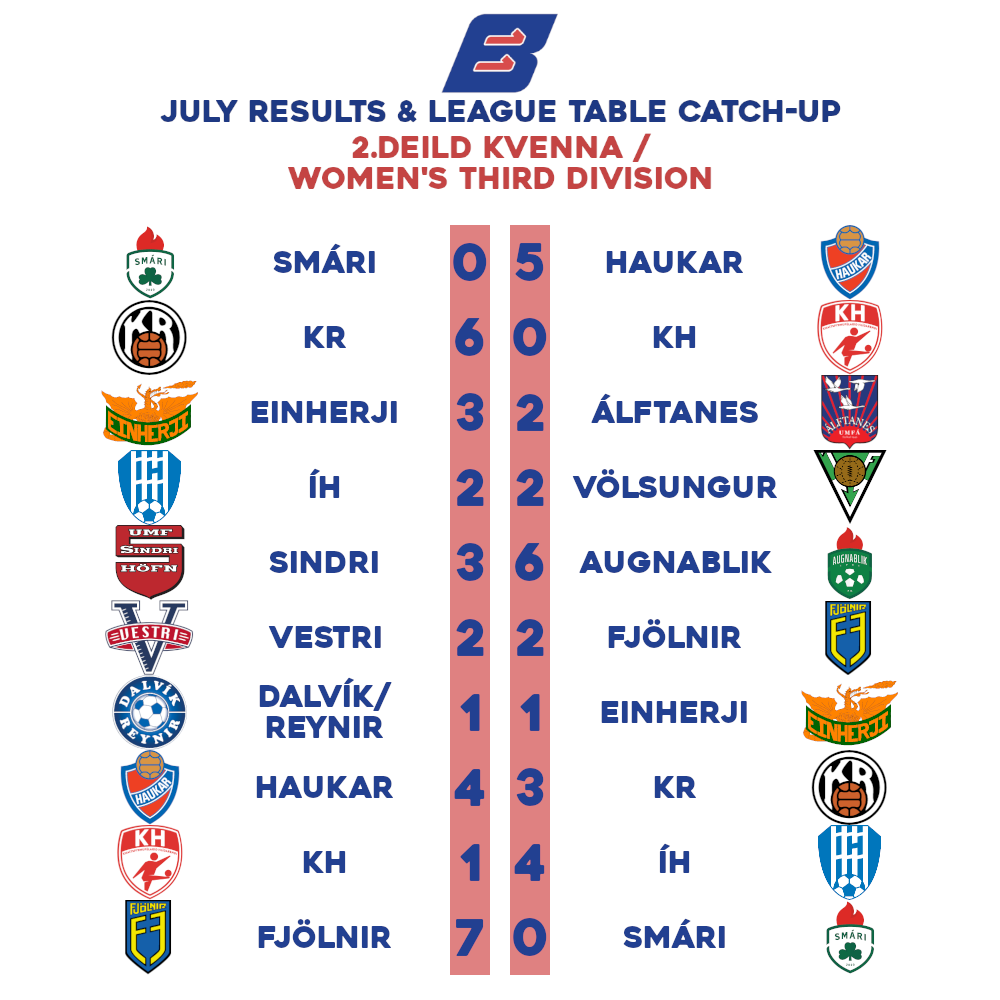
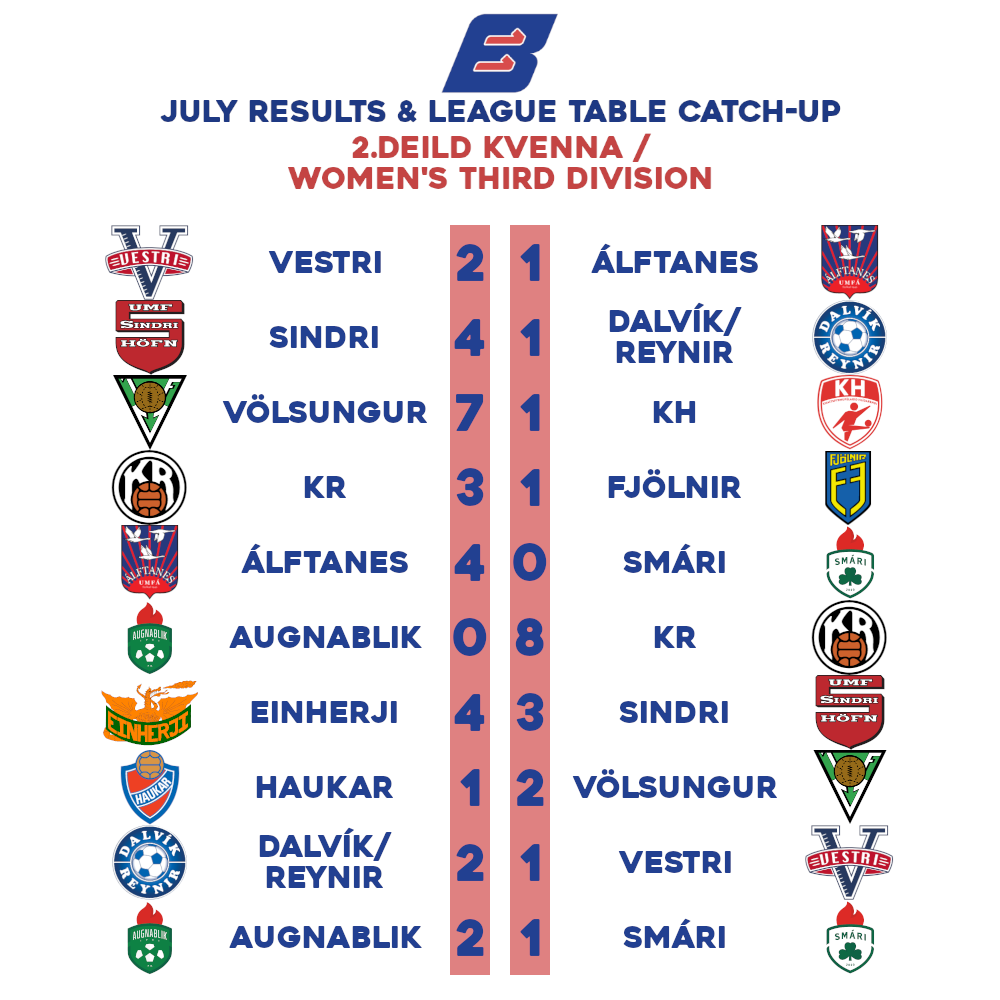
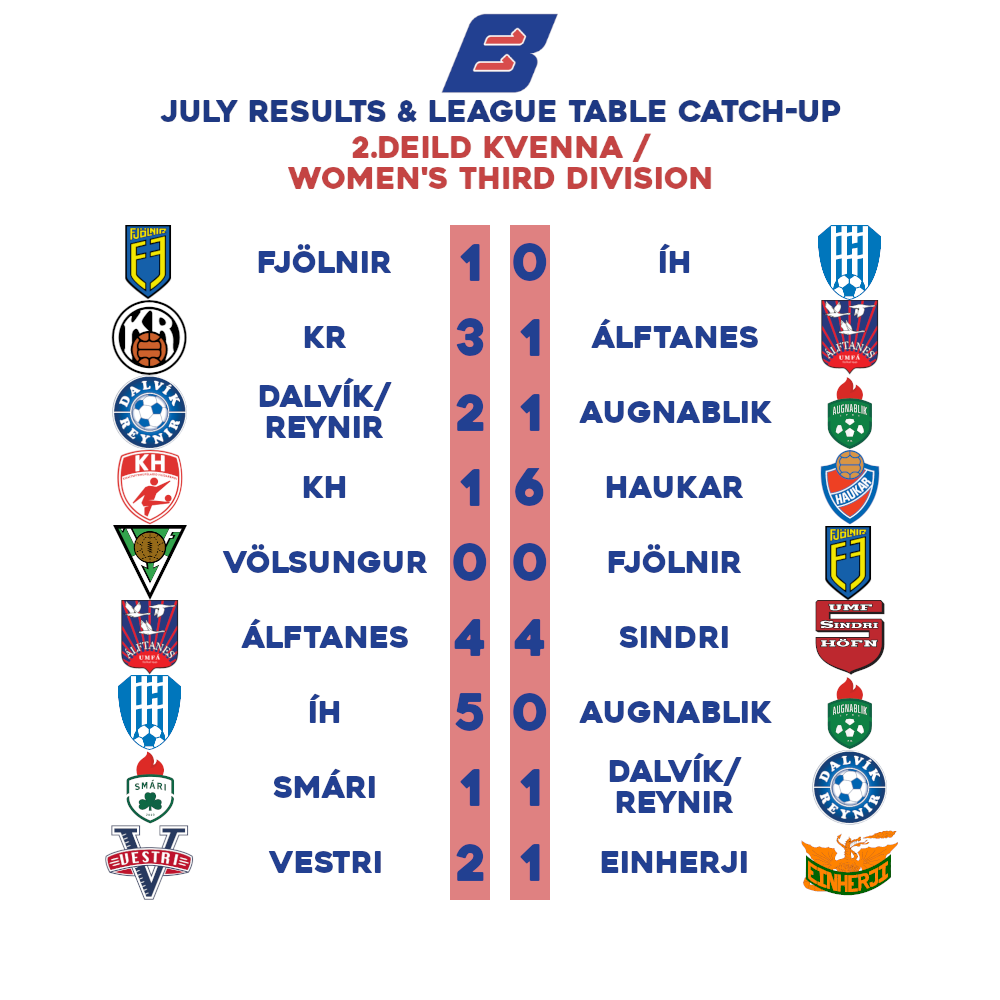
In 2023, the ultra-competitive 2.deild kvenna was split only unofficially as the season waned, with a large group all close to the promotion spots while the 3 bottom clubs virtually contested a division of their own. While the remaining clubs from last year have had varying degrees of progression, regression and stagnation in 2024, we now have an official split which I think will somewhat limit the amount of expensive travel each team has to make, but moreover will enhance the competitiveness of the remainder of this campaign, providing us with an exciting finish to follow. Below are all the results from the division in July: